
Isolation ≠ Indifference ⇒ Isolation = Sacred Boundary of Respect
The Silent Morning on Seoul’s Subway Line 2
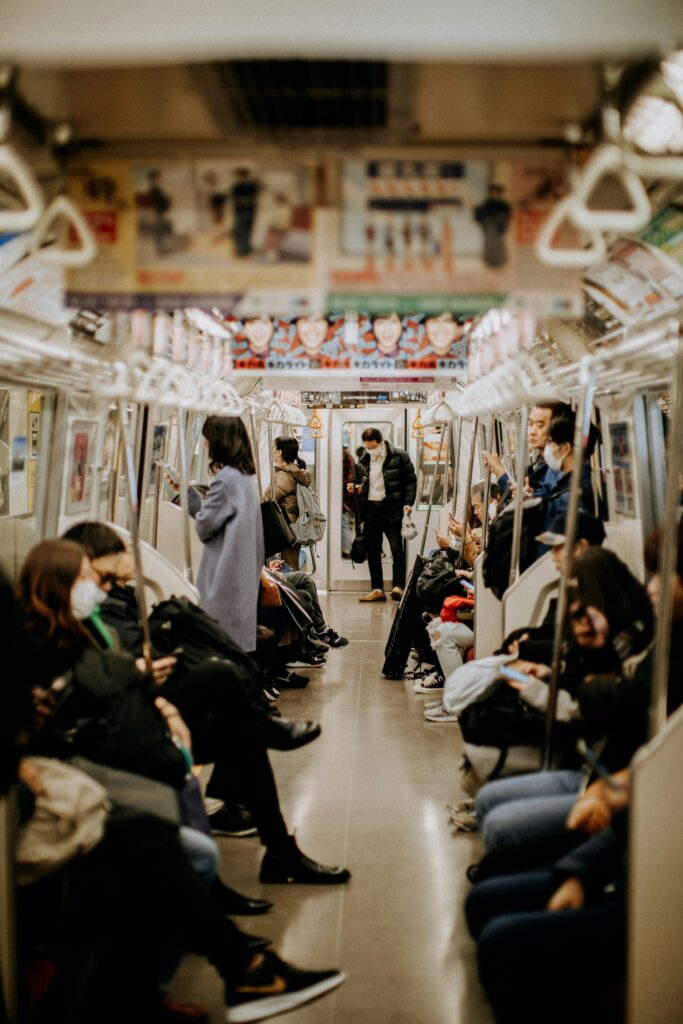
At 8:00 AM on Seoul’s Subway Line 2, silence is not merely observed; it is collectively manufactured. Hundreds of commuters stand shoulder-to-shoulder, yet the only audible sound is the low, metallic hum of the train slicing through the dark underground tunnels. Eyes are cast downward, safely anchored to glowing screens; ears are shielded by wireless earbuds. To the uninitiated foreign observer, this display of intense emotional containment is often misread as a frozen wall of urban indifference in modern Korean culture.
The Water Drop Metaphor: Personal Space in Korea
But look closer, beneath the sterile glaze of modernity. This is not a wall. It is the exquisite, fragile geometry of a water drop.
A water drop exists in a state of perfect, self-contained tension. Its perimeter is held together by a silent physics—a social surface tension born not from a desire to exclude, but from a profound, almost sacred discipline of non-intrusion. In a bustling city like Seoul where personal space is a luxury, the Korean commuter grants you the ultimate gift: the privacy of anonymity. It is an unspoken agreement to carry one’s own weight without spilling into another’s orbit.
Discovering ‘Jeong’ (情): The Subterranean Reservoir of Humanity
Yet, this tightly coiled surface tension possesses a beautiful paradox. It is not rigid; it is waiting for a catalyst.
When a stranger genuinely reaches out—perhaps a traveler hesitating over a map—the membrane of the droplet does not shatter; it effortlessly dissolves. Suddenly, the stoic commuter becomes a guide, walking you three blocks out of their way to ensure you find your destination. In the quiet corners of local Korean markets, an elderly cook, sensing a traveler’s solitude, will silently slide an extra dish of seasoned greens onto the table.
This is Jeong (情)—not a loud, performative hospitality, but a thick, subterranean reservoir of shared humanity that flows quietly beneath the surface. The global allure of modern Korea did not bloom from flashy neon signs alone; it was sustained by these millions of self-contained droplets who know exactly when to hold their boundaries, and precisely when to melt into rivers of collective grace.
Ready to dive deeper into the vibrant energy of Seoul? Explore our [Local Guide to Seongsu-dong: The Brooklyn of Seoul] and experience this unique culture firsthand!