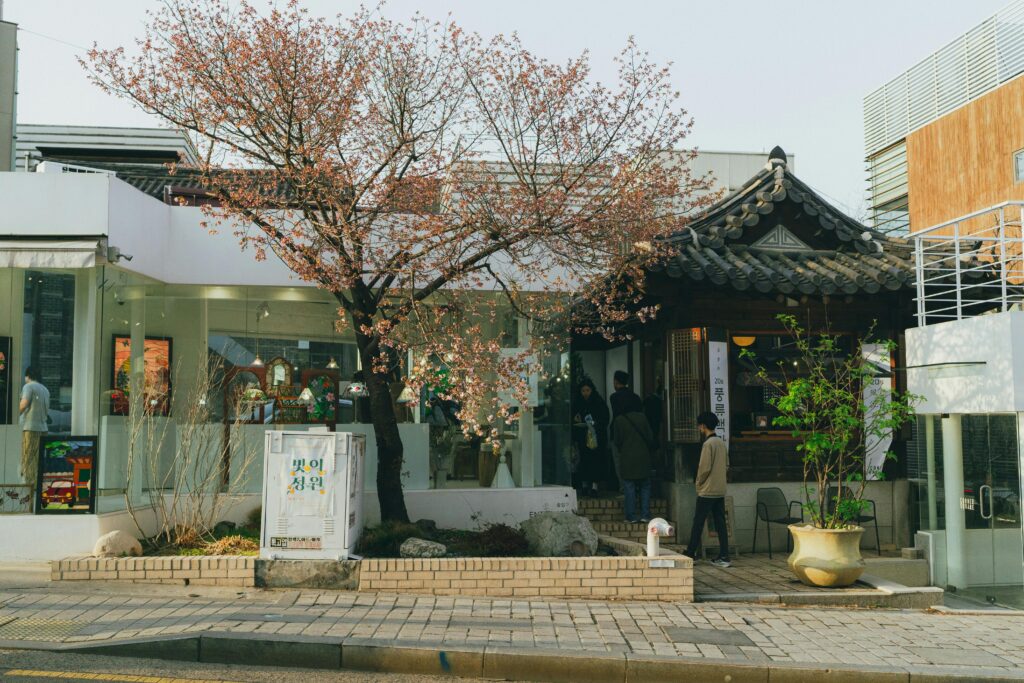

The cartography of global desire has been rewritten. For decades, the itinerary of foreign tourists and global business executives visiting Seoul followed a predictable, high-gloss rhythm: the historical stillness of Gyeongbokgung Palace followed by the towering, air-conditioned glass monoliths of Myeong-dong’s duty-free emporiums. Today, however, the world’s trendsetters, Gen-Z digital natives, and global marketers are bypassing the skyscrapers entirely. Instead, they are guided by blue dots on digital maps, tracking down the narrow, unvarnished labyrinth of Seongsu-dong.
They come searching for the friction between the old and the immediate. They come to see faded auto repair shops and printing factories.
To view this phenomenon through the narrow, superficial lens of “tourism” or a passing “hip trend” is to miss the profound socio-spatial mutation occurring within its brickwork. What we are witnessing in Seongsu-dong right now is a radical, high-stakes thesis on physical survival in an era dominated by the frictionless ease of e-commerce. It is a living laboratory proving that when retail ceases to be a mere transaction, it must become a hyper-condensed pilgrimage.
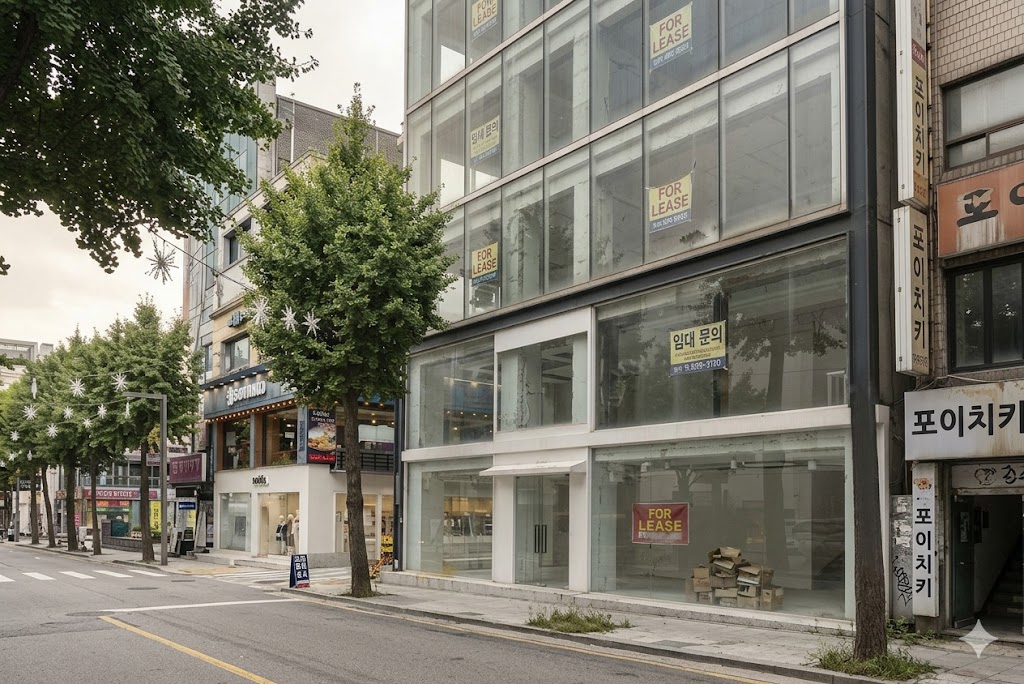
1.The Ghost of Garosu-gil: How Corporate Capital Evaporates the Soul
To understand the brilliant defiance of Seongsu-dong, one must first confront the cautionary tale of Sinsa-dong’s Garosu-gil. A decade ago, Garosu-gil was the ultimate sanctuary for independent creators—an artisanal ecosystem of intimate ateliers, indie fashion boutiques, and exotic cafes. It possessed what Walter Benjamin called an “aura,” a distinct sense of place.
However, when institutional capital noticed its heat, corporate flagship stores and massive global franchises swept in. They paid astronomical rents to build monuments to homogeneity.
Institutional Capital × Impatience = Spatial Homogeneity
Once Garosu-gil began to look like every other high street from London to Shanghai, its soul evaporated. Capital, in its impatience, had gentrified the very poetry that gave the street its value. It became a commercial desert of glass and steel, abandoned by the very trendsetters who discovered it. Corporate franchisification did not just raise the rent; it erased the originality.
2. The Ephemeral Feed: Democratization of the Temporary
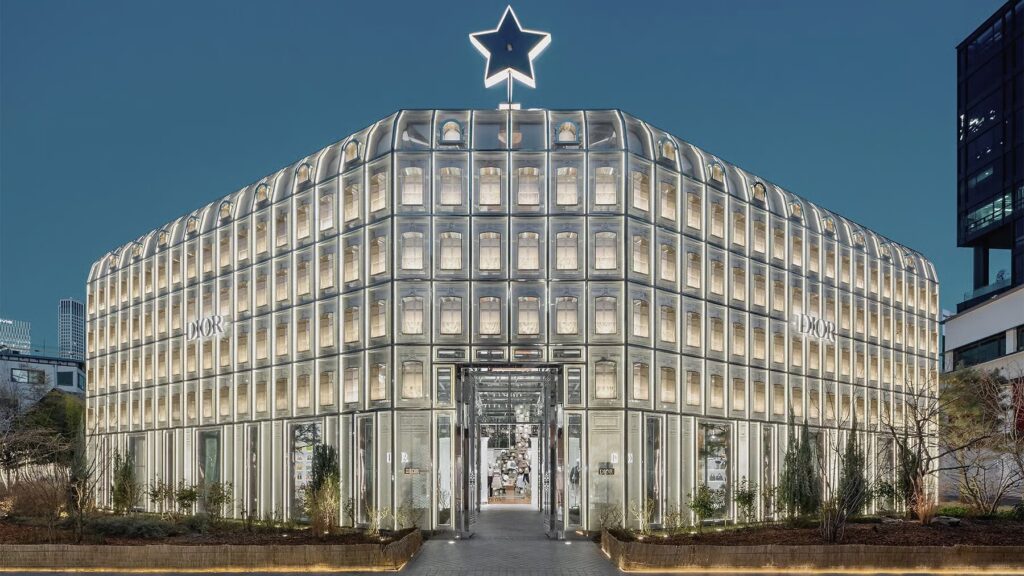
Seongsu-dong looked at the ghost of Garosu-gil and chose a more chaotic, brilliant strategy: it treats the physical neighborhood as a real-time digital feed.
Because South Korea possesses one of the most terrifyingly efficient digital infrastructures on earth, physical retail spaces had to evolve or face immediate obsolescence. Seongsu-dong’s solution was the democratization of the ephemeral. On these streets, architecture is no longer permanent; it is a pop-up.
A heritage luxury house colonizes a raw, rusted auto-repair shop for seven days, only to vanish next week to make room for an underground tech collective’s interactive playground. It creates a physical manifestation of FOMO (Fear Of Missing Out)—a high-velocity, real-world Instagram feed where the content is constantly being refreshed. The space behaves like a platform, not property.
3. The Friction of Authenticity: Local Alliances and the Protective Brake
Yet, the true gravity of Seongsu-dong does not lie in the superficial brilliance of these corporate takeovers. It lies in the smell of industrial grease and printing ink that still hangs stubbornly in the air. The magic is in the resistance.
Sustainable Urbanism = Hyper-Digital Innovation + Historical Preservation
Through alliances of local creators and sustainable anti-gentrification pacts with local authorities, the district is fighting a crucial socio-economic battle to maintain its authentic ecosystem. The accumulation of time—evident in rusted iron doors, weathered red-brick walls, and the rhythmic, heavy hum of printing presses—has layered the space with an irreplaceable authenticity.
The global traveler does not want to be a passive consumer anymore; they want to feel the texture of local life. They want to hunt down hidden independent boutiques tucked away in alleyways, consume emerging Korean designer brands, and seamlessly assimilate into the heavy, honest history of the local soil.
Conclusion: The Sustainable Balance
Ultimately, the evolution formula of Seongsu-dong delivers a clear, uncompromising message to the global marketplace. The true power of a physical space to compete with the digital world does not lie in superficial, flashy interiors or manufactured nostalgia.
It is found in a fierce, sustainable sense of balance. You must innovate with the speed of light, treating your streets as a dynamic digital feed, but you must anchor your foundations in the irreplaceable, heavy authenticity of the local historical ecosystem. The future of brick-and-mortar retail hinges entirely on whether these protective brakes can withstand the weight of capital.