
If the silent morning commute on Seoul’s subway is a masterclass in maintaining protective boundaries, stepping into the right local spaces is a lesson in how beautifully those boundaries can melt away. As we explored in our previous column, The Country of Water Drops, the true global allure of Korea lies beyond its polished neon surfaces; it rests quietly in the subterranean reservoir of shared humanity known as Jeong (정).
Here is your local guide to five meticulously chosen sanctuaries in Seoul where the surface tension breaks, allowing you to experience the authentic, tactile warmth of the Korean people.
1. The Traditional Markets (Gwangjang & Namdaemun)
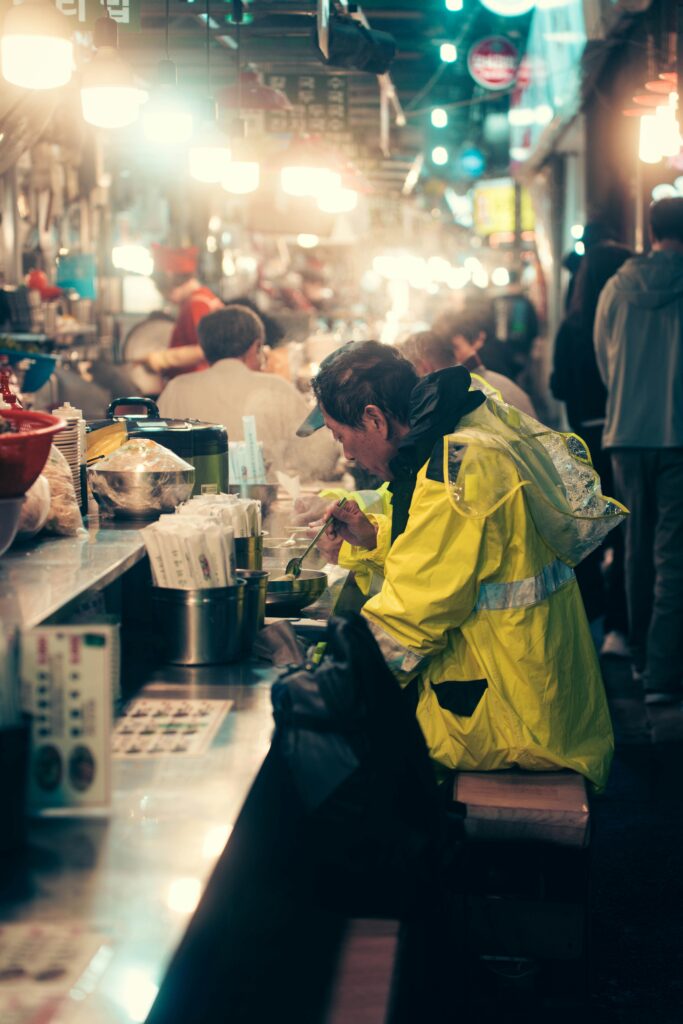
A traditional Korean market is a theater of unvarnished commerce and unspoken generosity. Amidst the clatter of stainless steel and billowing clouds of steam, the geometry of personal space vanishes. Here, jeong is a physical reality. It is found in the elderly vendor, her hands worn from decades of meticulous labor, who silently slides an extra piece of crispy mung bean pancake onto your plate. There is no expectation of profound gratitude—it is simply the primal instinct of a shared table.
2. Tranquil Temple Stays: Jingwansa & Jogyesa
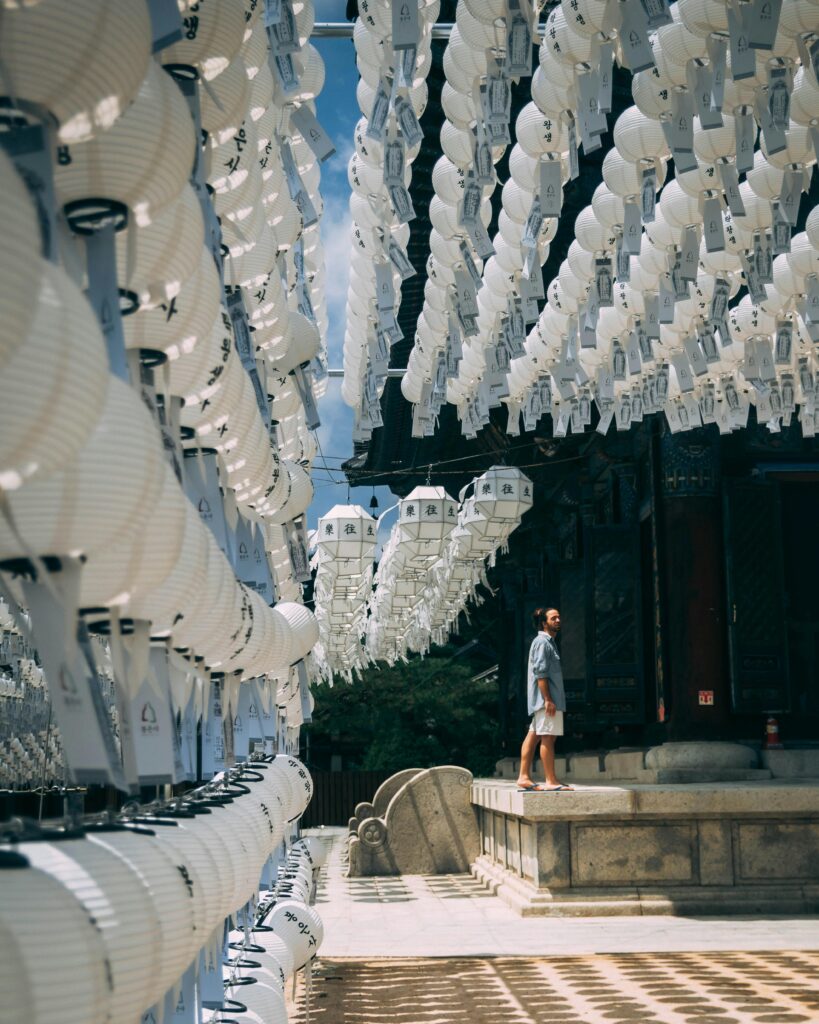
If the city’s underground transit relies on a manufactured silence of necessity, the silence of a mountain temple is an architecture of choice. In the mindful quiet of a temple stay, jeong is experienced not through abundance, but through presence. It resides in the gentle, precise instruction of a monk showing you how to hold a tea bowl, or the quiet camaraderie shared while sweeping the wooden floors at dawn.
3. Neighborhood K-BBQ Spots
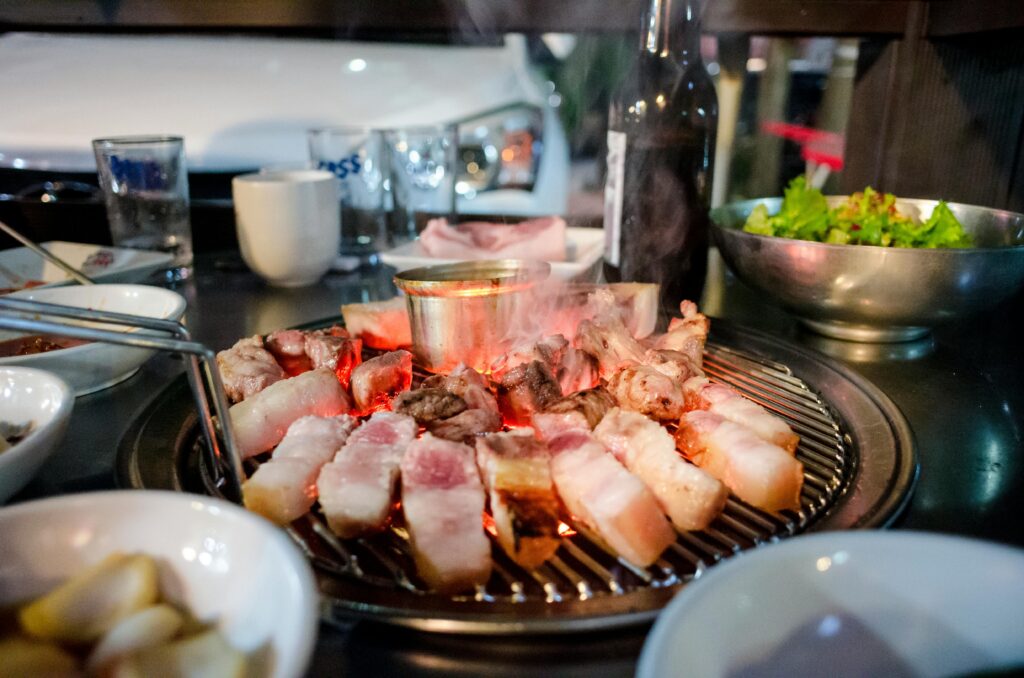
The ritual of the Korean barbecue is inherently communal, anchored by the chaotic, beautiful element of fire. For a first-time foreign visitor, the dizzying array of side dishes and the sizzling grill can be daunting. It is precisely here that the social droplet dissolves. Do not be surprised when the restaurant owner steps in to physically hand-wrap a perfect ssam (lettuce wrap) of grilled pork and savory ssamjang, placing it directly onto your plate. It is an immediate, maternal breaking of the physical boundary.
4. The Neighborhood Baekban (Gisa Sikdang / The Driver’s Diner)
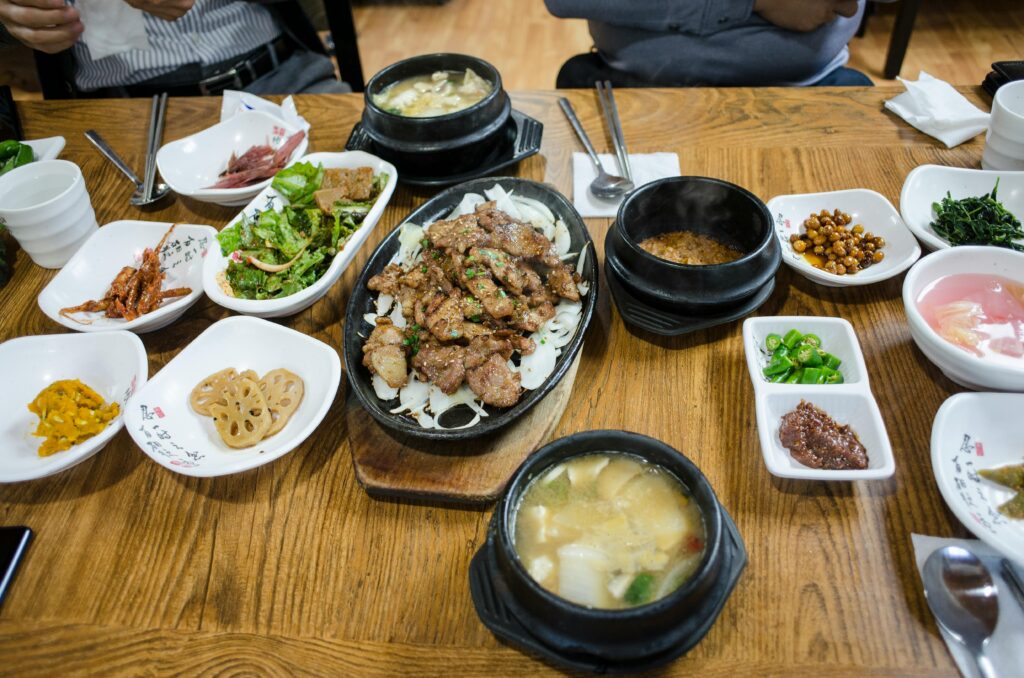
To understand the pure, everyday mechanics of jeong, one must step into a Gisa Sikdang. Literally translating to “driver’s restaurant,” these local diners were originally established as quick, reliable sanctuaries for taxi drivers working grueling hours behind the wheel. Today, they remain the ultimate bastions of the baekban—a traditional, home-style meal where a staggering orbit of seasonal side dishes surrounds a humble bowl of rice and steaming soup.
The aesthetic of these spaces is purely functional, yet the generosity is immense. Here, jeong is not a delicate, poetic sentiment; it is a hyper-efficient, edible mandate ensuring that no worker leaves hungry. You will witness it in the communal stoves where patrons casually fry their own eggs, or in the swift, practiced hands of the waitstaff who silently replenish an empty dish of braised mackerel before you even have to ask. It is an architecture of profound, unpretentious care, built specifically to refuel the weary.
5. Local Mountain Trails: Bukhansan & Inwangsan
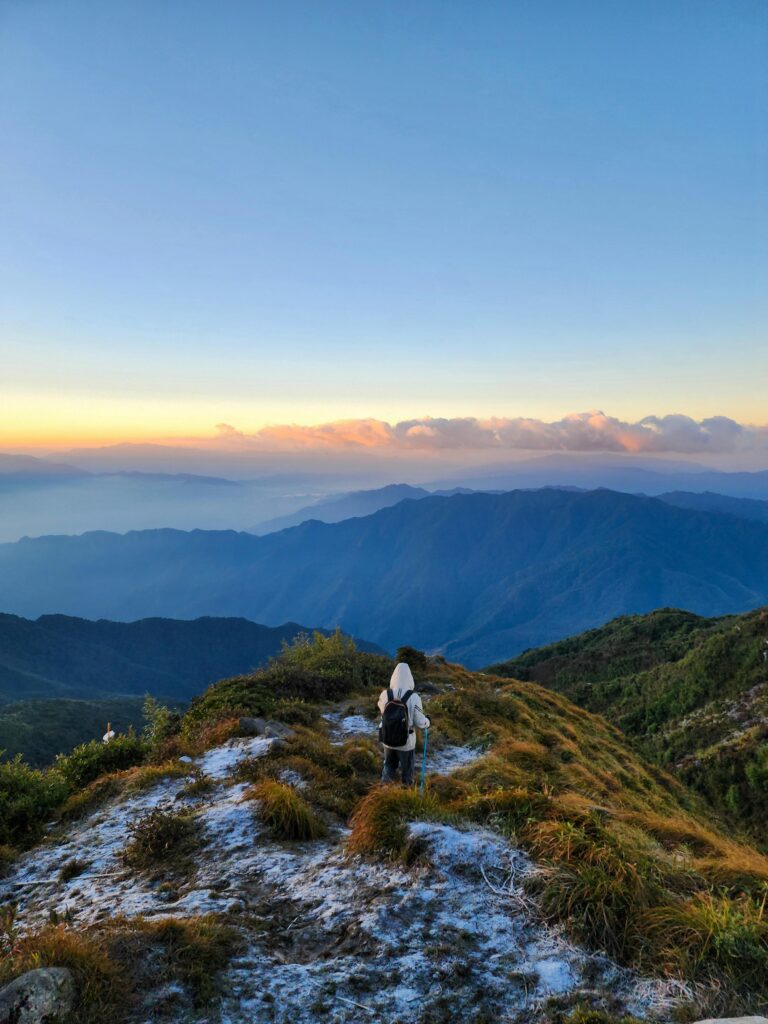
Korea is a nation defined by its topography, and the local hiking trail is perhaps the most egalitarian space in the country. The shared physical exertion of navigating the granite peaks creates an instant, unspoken camaraderie. As you pause for breath on a rocky outcrop, passing groups of fully-geared local hikers will rarely let you sit in isolation. A paper cup of chilled makgeolli (rice wine) or a slice of freshly peeled apple will be offered from their packs. For the duration of the mountain, you are not a stranger; you are a fellow traveler.